
Why Supporting Independence in Children Matters

By Beth Suitor, Head of School
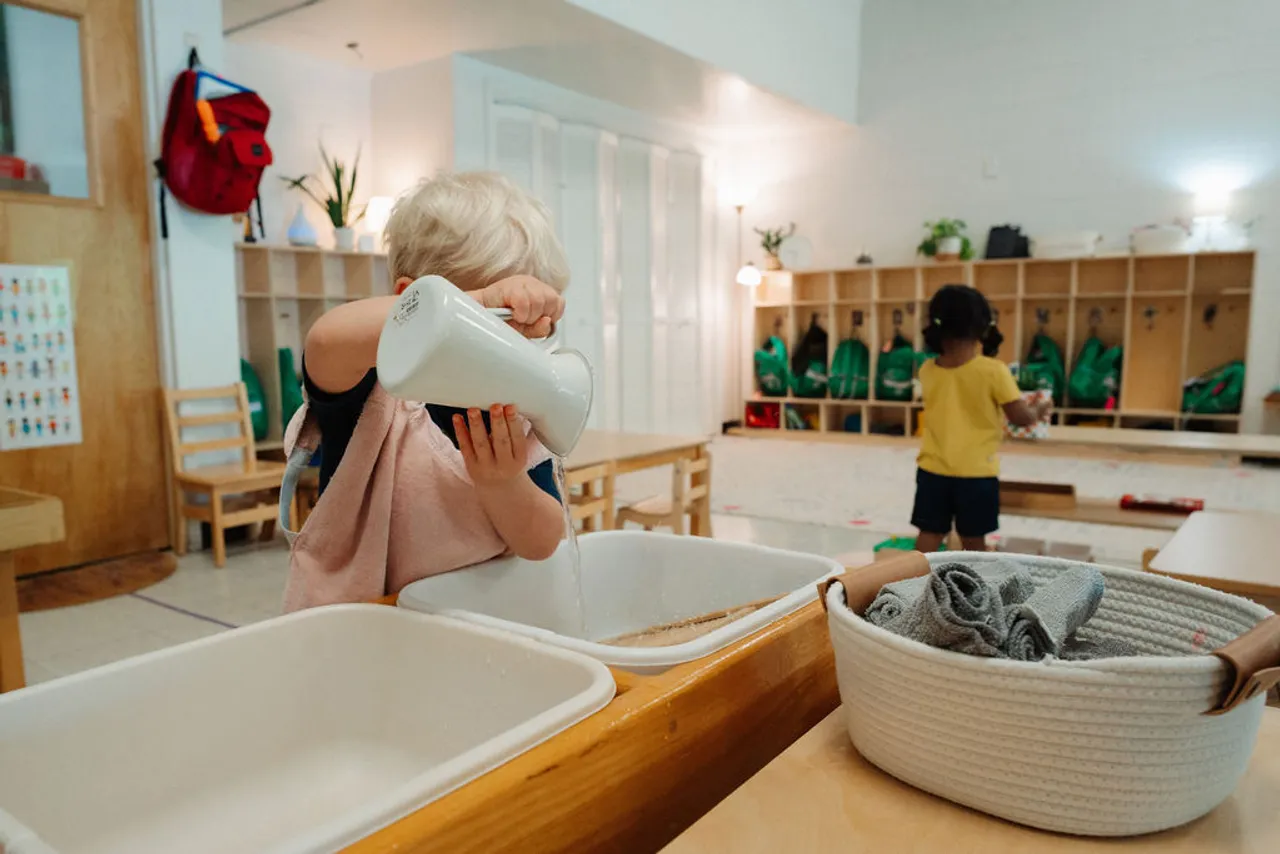
Never help a child with a task at which he feels he can succeed. - Dr. Maria Montessori
As you know, supporting the development of independence is a core principle of the Montessori philosophy. But why does it matter?
Being able to do something for oneself is key to building authentic self-confidence. When we help children with something they are capable of doing on their own, we may unintentionally signal to them that we do not believe in their ability. I know that even as an adult, when I work through a challenging task, it results in increased resilience, problem-solving, and ultimately, a greater belief in myself. My mom often shared a little piece of “Mom-wisdom,” as only a mom can: “If you think you can, you’re right. If you think you can’t, you’re right.” That self-confidence is also key to developing agency.
Our teachers are highly trained observers who specialize in the three-year age span that they teach. Did you know that Montessori training, which is similar to a master’s degree-level program, only spans three-year increments: ages 0-3, 3-6, 6-9, 9-12, or 12-15? While a typical education degree is either K-6 or K-12, so much of Montessori revolves around human development, so each credential is just for teaching students within a three-year developmental plane. Our teachers observe the child and offer just the right level of support. One of my mantras is to hold them capable.
Of course, as a parent, this was all well and good until we were running late and I found myself caught between nurturing my daughter's independence and getting out the door on time. And if you’ve ever watched a toddler insist on putting on their own shoes when you’re already running behind, you know that patience, and your commitment to fostering independence, can really be put to the test! The struggle is real!
Check out the American Montessori Society’s October Family Connection Newsletter for more on helping your child develop independence from toddler through adolescence. I am also including a few quick tips from the Association Montessori Internationale below.
Five ways to support without taking over (from AMI)
- Wait a little longer – Count to ten before stepping in. Many struggles resolve on their own once a child has a moment to try again.
- Ask before you help – “Would you like help, or would you like to keep trying?” lets your child stay in charge of their own work.
- Help with one step, not the whole task – Hold the jacket open, then let them push their arms through. Do the smallest part that gets them moving again.
- With children under six, move slowly and say less – If you demonstrate, move slowly and talk very little so your child can watch your hands.
- Set things up so they can do it – A low hook, a small pitcher, a stool at the sink. When the space fits the child, fewer moments need an adult.

Quicklinks