
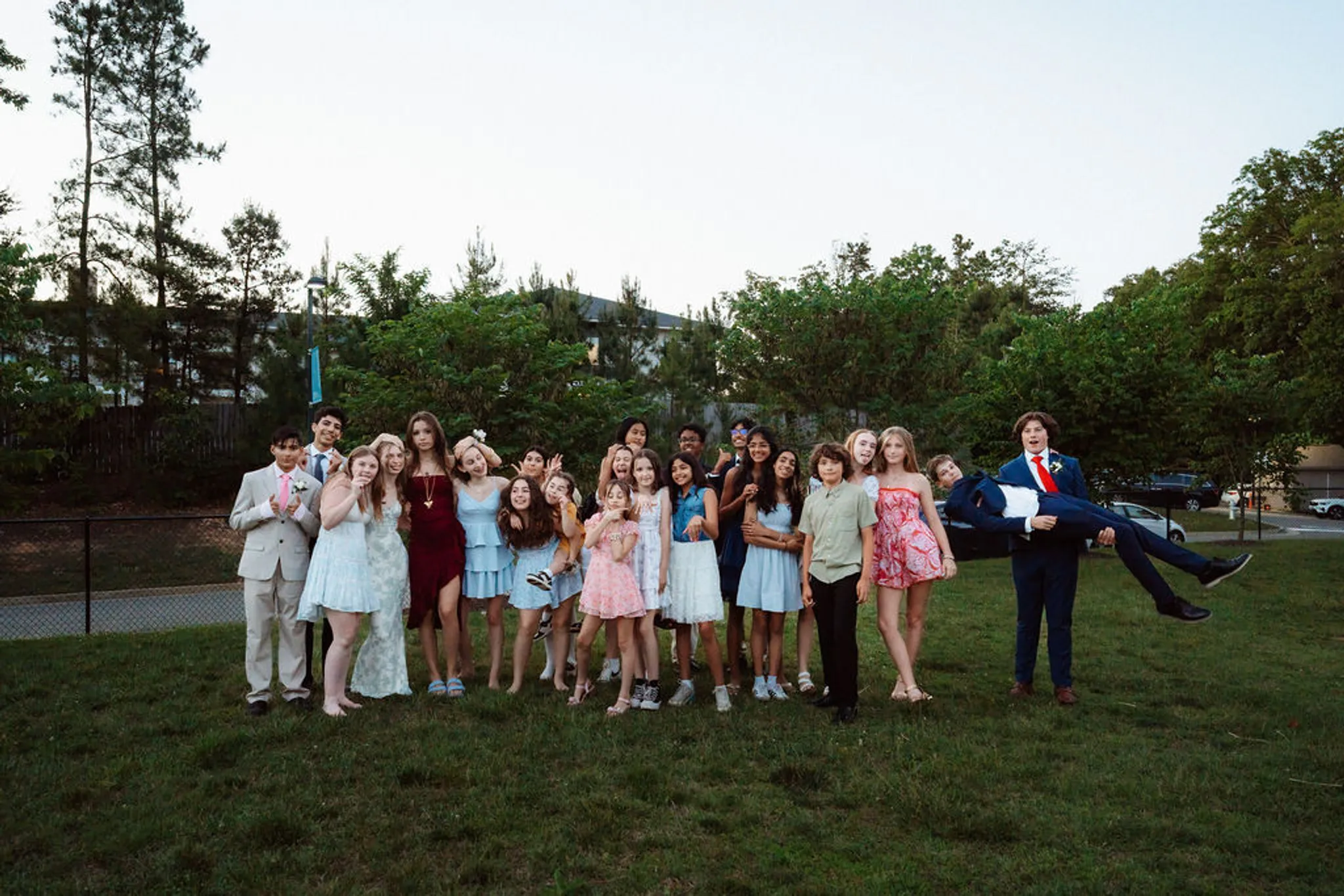
Middle School
Becoming Confident, Capable, and Self-Directed
Where it All Comes Together
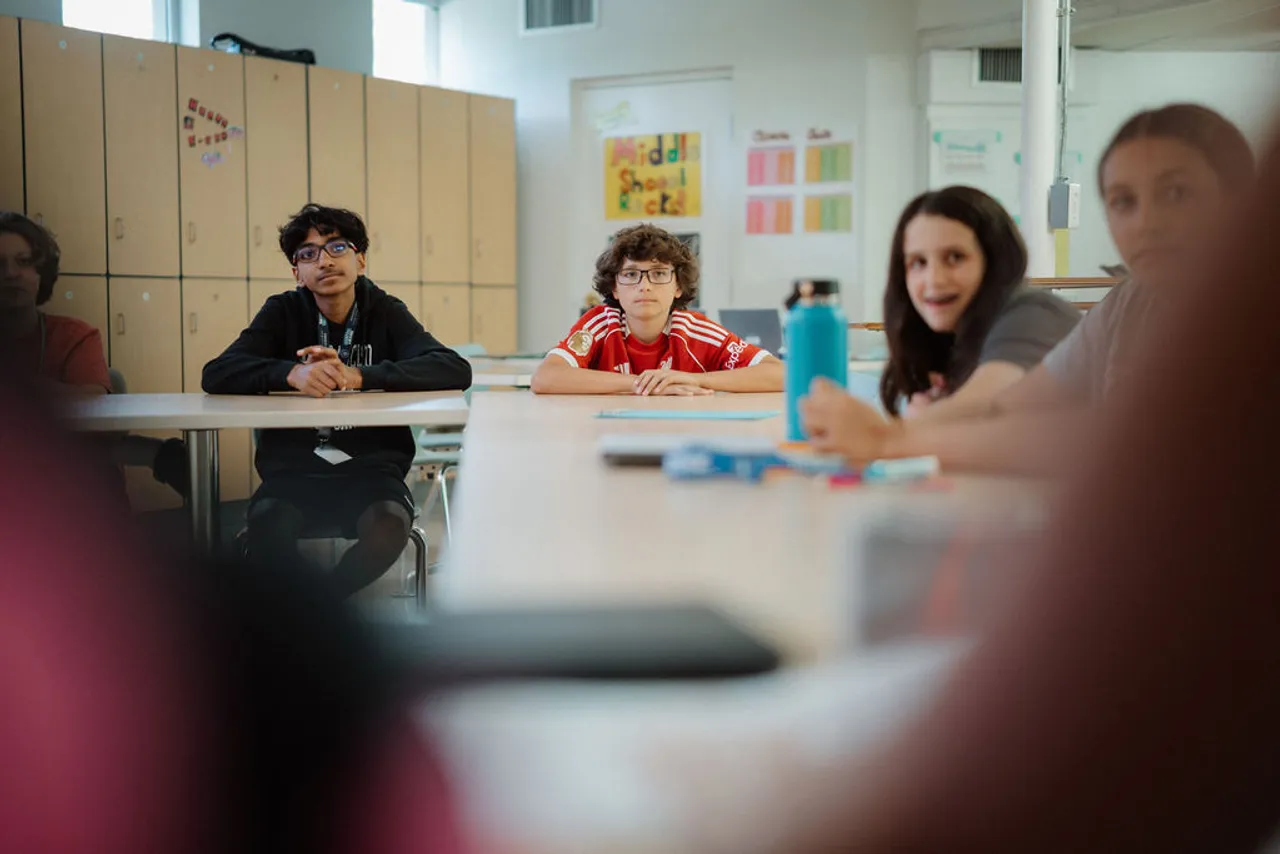
Seventh- and eighth-grade students are entering adolescence, a time of rapid personal growth and change. To guide students through this identity-forming moment, the middle school program cultivates a community where every student experiences belonging and significance.
Belonging is built daily.
Each morning opens with a community meeting and each afternoon closes with one, and then deepened on overnight field studies, where students travel everywhere from a sustainable farm outside Asheville to the Montessori Model United Nations in New York City, where they present resolutions inside the actual UN building. These are not just academic trips: students plan and prepare meals for one another and respond to reflective prompts in their trip journals. Significance grows as students contribute in ways that matter: serving local nonprofits on nearly weekly service trips, earning wages and paying rent in our Financial Literacy mini-economy, and completing high school credit courses such as Algebra I, Geometry, Spanish I, and Latin I.

The Outcome
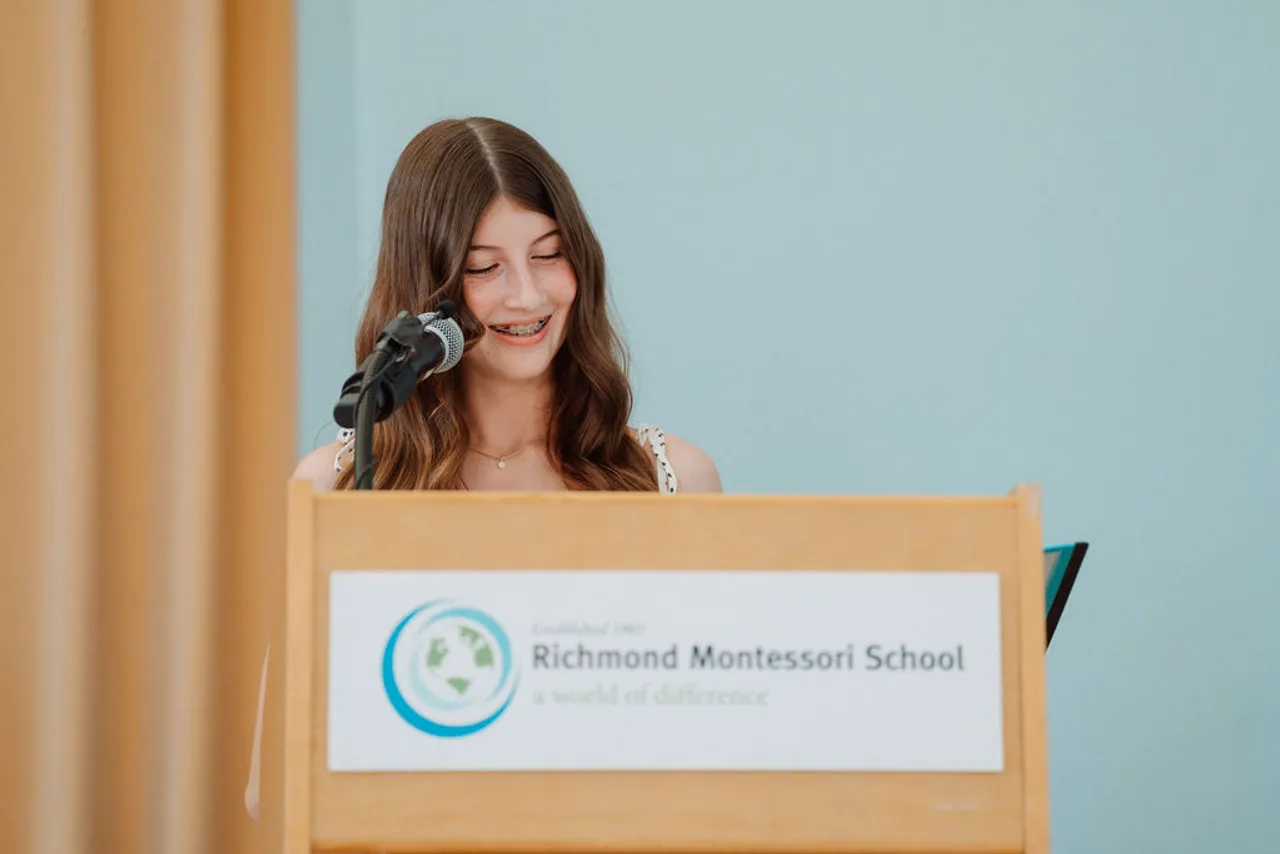
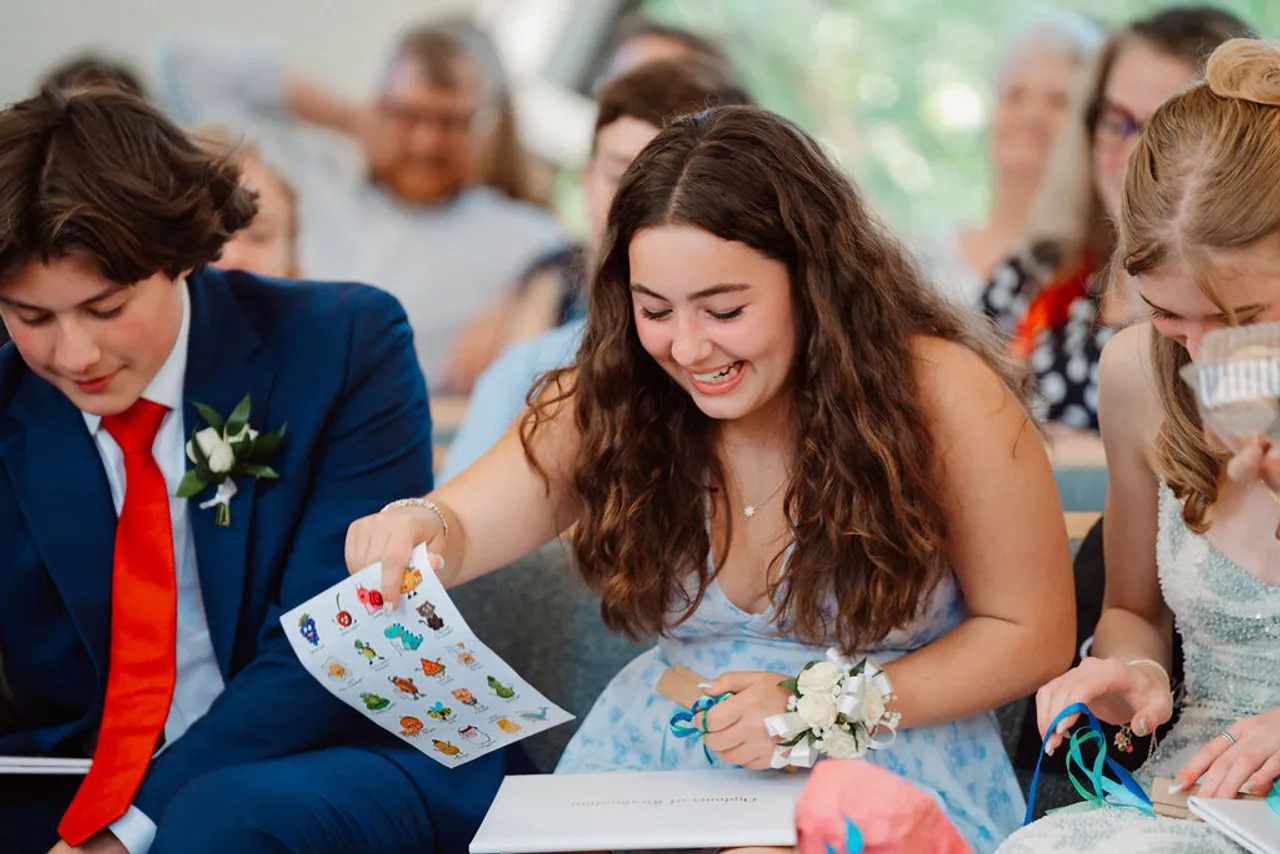
Your child leaves us confident, self-aware, and competent. Something you can see for yourself each June, when every graduate delivers a graduation speech that is unmistakably their own. The best evidence that this work succeeds? The word graduates use most often to describe the middle school in those speeches is "home." And year after year, they keep coming back: for graduation, Winterfest, Harvest Fest, or just because they have a day off from high school.
Will my child be prepared for high school?
Yes, Academically and personally. Students can earn high school credit in Algebra I, Geometry, Algebra II, Spanish I, and Latin I, write high-school-level lab reports in science, and practice public discourse in our weekly Seminar. Our graduates have been accepted at selective programs and schools across the Richmond area, including Maggie Walker Governor's School, the J.R. Tucker IB Program, Collegiate, St. Catherine's, Steward, Trinity Episcopal, and Saint Gertrude. Just as importantly, they arrive knowing how to plan their work, advocate for themselves, and manage their time.
See full list: Middle School Learner Outcomes
My child hasn't been in Montessori before. Will they be able to join in middle school?
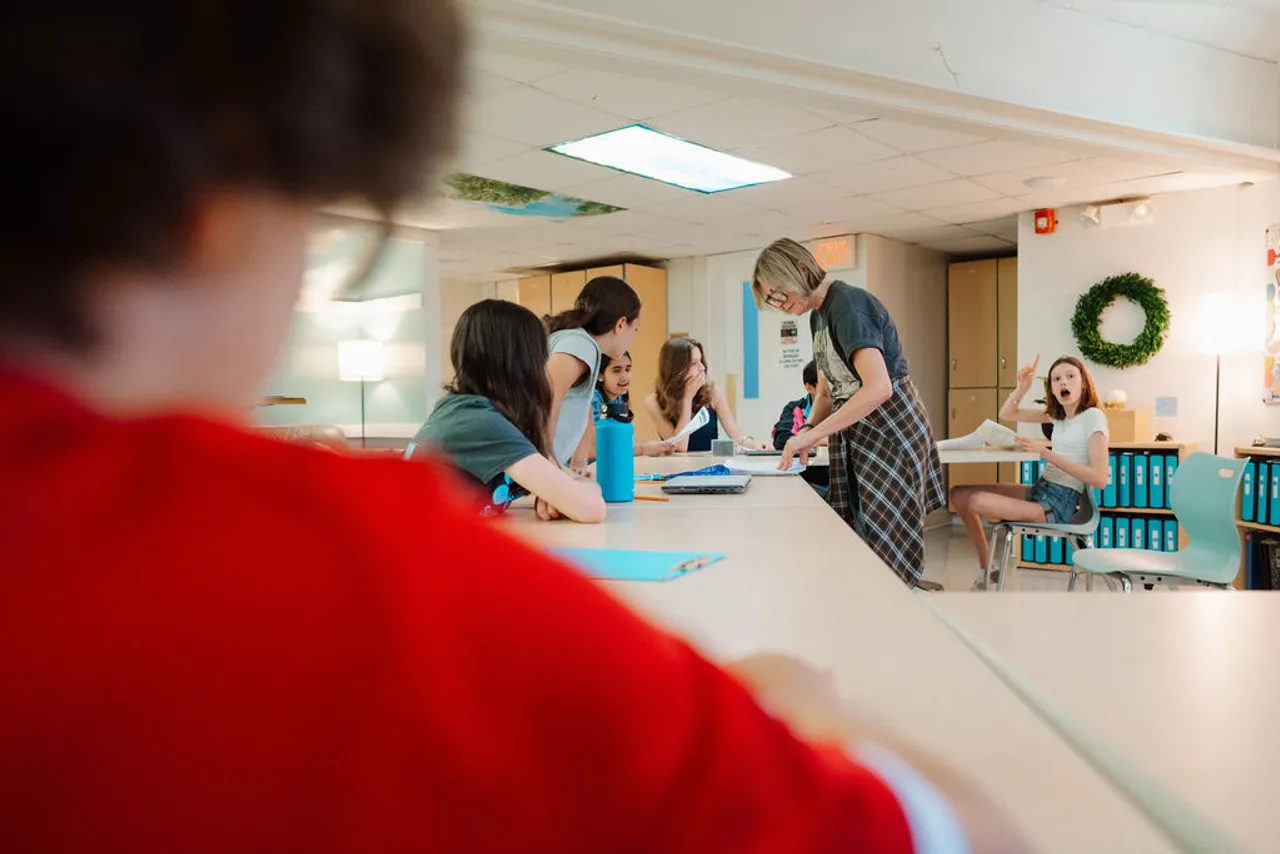
Yes, and they will be in good company. Students join our middle school from public, private, and Montessori backgrounds, and the program is designed with that in mind. The 7th grade year is intentionally a transition year, when students learn to navigate multiple teachers, plan their work, and manage new routines with real support behind them. We begin each fall with a two-night overnight field study to cultivate community and set the tone. We leave as a 7th grade and an 8th grade, new students and old, and return as a middle school bubbling with new friendships. In addition, every student meets with an advisory group twice a week to build work plans and develop strategies that fit how they learn, and skills like time management and self-advocacy are explicitly taught, never assumed. Montessori is not a prerequisite here. Curiosity and a willingness to be part of a community are what matter, and we meet each student where they are.
How is my child assessed? Do students receive grades?
Yes. Middle school is where RMS students are introduced to a traditional ten-point grading scale, so the first time they encounter letter grades isn't freshman year of high school. We strive to have our grades measure understanding, and do not include participation, effort, or timeliness. Those are supported and cultivated through advisory groups, limiting or expanding work cycle choices, and preparing the classroom environment for every kid. But grades are only one layer: students are assessed as much as possible on how they create, evaluate, and analyze, not just recall. They keep work from throughout the year, and twice a year, students lead their own conferences, presenting their progress and goals to their advisor and parents.
How does Montessori look in middle school?
Different on the surface, the same at the core. You won't find the standardized materials of the younger levels, because Maria Montessori's vision for adolescents (what she called Erdkinder) replaces those materials with purposeful work: a student-run business, a working farm, service to the community, resolutions presented at the United Nations. The practices remain deeply Montessori. Students still freely choose and plan their work within daily work cycles, follow their interests through self-designed investigations, and learn in a prepared environment, one now built around responsibility instead of manipulatives. Every level of RMS, middle school included, works toward the same eight Montessori learner outcomes, from independence and intrinsic motivation to global citizenship.
How does the middle school build character and community, not just academics?
Service is a curriculum here, not an hours requirement. Students volunteer at area nonprofits, mentor younger students, and support the toddler & primary programs. Through our financial literacy program, students can even donate their classroom-economy earnings to charity: donations the school matches with real dollars. Field studies, student-led fundraisers, and daily personal reflection time round out a program designed to grow good people.
What is the homework policy for Middle School students?
Homework is designed to reinforce daily lessons and promote independent learning skills. Students can expect about 1 to 1.5 hours of homework per night.
How does Digistorm School support students' social and emotional development?
We offer programs such as advisory groups, counselling services, and wellness workshops to help students navigate the challenges of middle school life.

Quicklinks